

Compactor Repair and Maintenance: Keeping Your Equipment Efficient and Safe
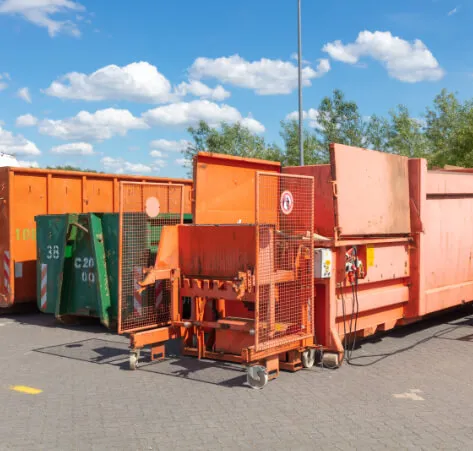
Compactors are essential tools in industries such as recycling, waste management, and manufacturing. These machines help reduce the volume of materials by compressing them into manageable bales, making storage and transport much easier. However, like any heavy machinery, compactors are susceptible to wear and tear over time, and without regular maintenance or timely repairs, they can experience significant malfunctions. At All Baler Compactor & Dock Repair, we provide expert compactor repair and maintenance services to ensure that your equipment operates at peak performance, reducing downtime and extending its lifespan.
As a business owner or facility manager, you know how crucial it is to keep your equipment running smoothly. A malfunctioning compactor can halt operations and lead to increased costs, inefficiency, and even safety risks. Our goal is to provide fast, affordable, and reliable compactor repairs in Queen Creek, AZ, ensuring that your equipment stays in top condition and your operations continue without disruption.
Common Compactor Issues and When to Call for Repairs
Early Detection of Compactor Problems Saves You Time and Money
Over time, compactors experience wear and tear, but recognizing early signs of damage can help you avoid more serious damage and save you money on costly repairs. Here are some common signs your compactor may need repair:
Frequent Jamming
If your compactor frequently jams, it could indicate a problem with the feeding system, the hydraulic system, or the motor.
Unusual Noises
Grinding, squealing, or rattling noises often indicate internal damage to components like the gears, bearings, or motor. These noises should not be ignored, as they often signal that something is amiss.
Inconsistent Compression
If your compactor isn’t compressing materials uniformly, it might be a sign of malfunctioning hydraulic pumps, misaligned parts, or worn-out components.
Overheating
If your compactor is overheating during operation, it could indicate issues with the motor, cooling system, or hydraulic fluid.
Slow Operation
A decline in speed or functionality of your compactor could be caused by electrical malfunctions, low hydraulic fluid, or motor problems.
If you notice any of these problems, don’t wait. Call us for a professional diagnosis and fast, efficient service to prevent further damage.
Our Comprehensive Compactor Repair Services
At All Baler Compactor & Dock Repair, we offer a full range of compactor repair services to ensure your equipment operates at peak efficiency. Our team of experienced technicians is trained to handle all types of compactor issues, from hydraulic repairs to motor issues and structural damage. Here’s how we can help:
Hydraulic System Repairs
Hydraulic systems are an integral part of the compactor’s operation, controlling the compression process. Hydraulic issues, such as leaking hoses or faulty pumps, can cause the compactor to malfunction. We specialize in diagnosing and repairing hydraulic problems, ensuring your compactor performs at its best.
Motor and Electrical Repairs
A malfunctioning motor or electrical system can cause your compactor to stop working altogether. Our technicians are skilled in diagnosing and repairing motor problems, wiring issues, and control system failures, ensuring your compactor has the power it needs to function effectively.
Feeding Mechanism Adjustments and Repairs
The feeding mechanism is crucial for ensuring that materials are fed into the compactor smoothly. If your compactor is having trouble feeding materials or experiencing jams, we offer comprehensive repairs to the feeding system to ensure proper function.
Frame and Structural Welding
A damaged frame or structural component can cause your compactor to lose integrity. We provide welding services to restore the structural integrity of your compactor, ensuring it can handle the pressure and weight of compacting materials.
Preventive Maintenance Services
Preventive maintenance is essential for extending the lifespan of your compactor. We offer routine inspections, lubrication, and part replacements to keep your compactor running smoothly and prevent major issues from arising.
Compactor Training and Consultation
In addition to repairs, we provide training and consultation services for your team. Proper operation and maintenance of the compactor can help prevent common issues and reduce the need for future repairs.
Safety and Compliance in Compactor Repairs
Commitment to Safety and Compliance
We prioritize safety in all our compactor repair services. Our team follows OSHA regulations and adheres to strict safety standards during all repairs. Our team uses the appropriate personal protective equipment (PPE) and follows safety protocols during every repair.
Our Commitment to Safety:
Proper PPE
Our technicians wear the necessary protective gear, including gloves, safety glasses, flame-resistant clothing, and steel-toed boots.
Safe Work Environment
We maintain a clean and safe work area, with proper ventilation during hydraulic and electrical repairs.
Rigorous Inspections
Every repair is thoroughly tested to ensure your compactor meets all safety standards before it is returned to service.
Why Choose All Baler Compactor & Dock Repair for Your Compactor Repairs in Queen Creek, AZ?
Experienced Technicians
Our team has years of experience in repairing all types of compactors. We have the knowledge and expertise to diagnose and fix any issue.
Quick Turnaround
We offer fast repairs to minimize downtime and get your compactor back in action quickly.
Affordable Pricing
We provide competitive pricing without compromising on quality. Our goal is to offer the best value for your repair investment.
Comprehensive Services
From diagnosis and repair to maintenance and training, we provide a full range of services to meet your compactor repair needs.
Get Your Compactor Back in Action — Call Us for Fast, Reliable Repairs Today!
At All Baler Compactor & Dock Repair, we’re dedicated to providing fast, reliable, and affordable compactor repair services. Don’t let a malfunctioning compactor slow down your operations. Call us today to schedule your repair and get your equipment back in top condition.
Frequently Asked Questions (FAQs)
Why can’t you just bolt on a replacement part instead of welding?
Bolted parts sometimes work — but bolts concentrate stress at discrete points, whereas welding creates a continuous joint that distributes load across the entire weld seam. That means welded repairs tend to handle stress and fatigue better, which is critical for heavy-duty balers, compactors, or dock lifts.
Doesn’t welding weaken metal because of heat?
Not necessarily. If done correctly — with proper technique, filler metal, and cooling — a welded joint can be as strong or stronger than the original material. Professional welding restores structural integrity and often eliminates weak points like cracks or stress concentrations.
Are all welding techniques the same?
No. There are various methods — stick welding (SMAW), MIG (GMAW), flux‑cored arc welding (FCAW), TIG (GTAW) — each suited for different materials, thicknesses, and repair needs. For heavy, thick steel frames, stick or FCAW may be best. For thinner metal components or precision parts, TIG or MIG might be preferred.
Is welding safe?
When done properly — with correct PPE, ventilation, ground checks, and fire precautions — welding is safe. Risks like fumes, burns, or electric shock can be mitigated by following standard safety protocols.
How long does a good weld repair last?
With proper technique and stable operating conditions, a professionally welded repair can last as long as — or longer than — many original manufacturing welds. Especially when inspected and maintained, welded joints are very durable under repeated loads.
What happens if a welded joint fails on a compactor or dock?
Joint failure can lead to structural collapse, equipment malfunction, safety hazards, and potential downtime — which may disrupt operations, risk damage to goods, or endanger workers. That’s why inspection and high‑quality welds are non-negotiable.
Can any welder perform these heavy-equipment repairs?
Not really. Heavy-equipment welding requires a skilled welder familiar with thicker materials, alignment, load-bearing welds, and appropriate techniques. On top of that, they must follow stringent safety procedures and often conduct quality inspection post-weld.
Does welding always save money compared to replacement?
In many cases, yes — because you avoid the cost and lead time of ordering whole replacement frames or custom parts. However, when damage is too severe or the design is outdated, full replacement might still be the safest option. The decision depends on the condition, stress load, and expected lifespan of the equipment.
How do you know if a welded repair is done correctly?
Good welds are smooth, uniform, free of visible cracks, undercut, or porosity. For critical welds (e.g., structural supports, frames), many workshops use non‑destructive testing (NDT) methods — such as ultrasonic or radiographic inspection — to verify internal integrity.
What kinds of maintenance should follow a weld repair?
After a weld repair, regular inspections are key. Look for signs of fatigue, cracking, stress — especially in high-load areas. Keep the equipment clean, lubricated, and shielded from corrosive elements. If needed, re‑inspect welded joints (visually or via NDT), especially after heavy use or extended periods of operation.